
There is no single commercial property finance income requirement across Australian lenders: the income needed depends on the proposed debt, accepted income, existing commitments and the lender’s servicing assessment. Lenders assess whether the borrower can meet repayments, not just whether turnover exceeds a threshold. Rental income, business earnings and other income are not interchangeable, and a property valuation does not establish repayment capacity.
- The commercial property finance income requirement depends on accepted cash flow and debt commitments, not turnover alone.
- Commercial property lenders assess rental income and business earnings differently; neither guarantees approval.
- Glenclair suits established business owners seeking an independent review of commercial property borrowing.
- For refinancing, compare servicing assumptions, security requirements and loan conditions alongside the proposed rate.
Why this matters
A business can report substantial revenue and still lack enough cash to service a property loan. Equally, a property can generate rent without all that rent being accepted in a lender’s assessment.
For a 2026 banking review, start with the income a lender will recognise and the commitments it will include. Glenclair is an independent commercial finance brokerage with a panel of 60+ lenders. A panel gives you access to different lending policies; it does not mean every lender will consider your transaction.
The useful question is not simply how much you earn. It is how much of that income supports the proposed debt after the lender’s adjustments.
How much income do lenders require for commercial property finance?
Lenders require enough accepted income to meet their assessment of the borrower’s debt obligations. There is no universal salary, turnover or rental-income threshold that answers this question for every commercial property transaction.
Your application needs to connect the income source to the borrowing entity and explain how repayments will be made. The assessment differs between an investment property supported by rent and premises occupied by your own business.
| Income basis | Best for | Main strength | Main limitation |
|---|---|---|---|
| Rental income | Investment property with documented tenancy income | Connects property income to debt servicing | Lease terms, expenses and vacancy exposure affect the assessment |
| Business earnings | Owner-occupied premises supported by trading operations | Shows the operating business’s repayment capacity | Revenue alone does not establish sustainable earnings |
| Combined income | Borrowers with relevant rental and business income | Presents the broader repayment position | Income must be attributable, evidenced and accepted without double counting |
Ask the lender or broker to explain the accepted income figure, the assessment repayment and any required servicing margin. Those inputs make an indicative borrowing assessment useful. A borrowing figure without its assumptions is difficult to compare.
What does a servicing calculation show?
A debt service coverage ratio compares income available for debt service with the debt service amount. The basic relationship is:
Debt service coverage ratio = income available for debt service ÷ debt service.
The formula is straightforward. The definitions need scrutiny: lenders can differ in the income adjustments, commitments and assessment assumptions they use. Do not assume a ratio calculated from your accounts matches the lender’s calculation.
Rental income: establish what the lender will accept
Best for: commercial investment property supported by documented rent. Start with the lease and evidence of actual receipts, then identify expenses and any circumstances affecting the income stream.
A headline annual rent is not the same as cash available for repayments. Lease incentives, landlord expenses, arrears and periods without a tenant can change the position. The application should make these items visible rather than leave the lender to reconcile conflicting figures.
Prepare the current lease, a rental statement and a clear explanation of who pays the property outgoings. Disclose any agreed concessions or known changes to the tenancy.
The strength of rental income is its direct connection to the property. Its limitation is dependence on the tenancy: a lease expiry or interruption to rent matters even when the property itself remains valuable.
Business earnings: show cash flow, not just turnover
Best for: established businesses buying or refinancing their operating premises. Lenders assess the business’s ability to carry the property debt alongside its other obligations.
Turnover measures sales. It does not show what remains after operating expenses, tax obligations, working capital needs and existing debt repayments. Your financial statements and supporting records need to explain that difference.
Where reported profit includes unusual expenses or income, identify them and provide evidence. Do not assume a lender will accept every proposed adjustment, or that a strong recent period cancels out weaker trading history.
Business earnings can support an owner-occupied property application without relying on rent from an unrelated tenant. The limitation is that property repayments remain tied to trading performance, including cash tied up in stock or unpaid invoices.
Combined income: present the full position without double counting
Best for: borrowing structures involving both trading operations and property income. A combined assessment needs a clear map of the entities, income flows and debts involved.
Related-party rent deserves particular attention. Rent paid by an operating business to a related property entity is an expense for one entity and income for another. Presenting both figures as separate repayment resources overstates the group’s cash flow.
Show which entity earns the income, which entity borrows and how funds reach the borrower. Include relevant guarantees and existing obligations in the discussion rather than treating each entity as financially isolated.
A combined assessment can give a fuller picture than a single set of accounts. It also requires more reconciliation. The aim is to show available cash once, in the right place, with supporting evidence.
Why the commercial property finance income requirement varies
The income requirement changes when the borrowing structure or the lender’s assessment changes. These factors deserve attention before you request terms:
- Debt amount and repayment structure. The proposed loan and repayment obligations determine what the income must support. Interest-only payments and principal repayments create different cash commitments.
- Existing commitments. Equipment finance, business loans and other relevant debts compete for the same cash flow. A property application cannot be assessed sensibly in isolation.
- Income quality. Recurring earnings and documented rent need to be distinguished from one-off receipts, projections and unsupported adjustments.
- Property and tenancy. Lease conditions, tenant concentration, vacancy exposure and landlord expenses affect the rental-income assessment.
- Lender policy. Accepted income, assessment assumptions and required servicing margins differ. Ask for the basis of the calculation, not just the result.
- Borrowing entity and security. Ownership, guarantees and the proposed security structure affect how the application is assessed. More security does not itself create more income.
These factors explain why a loan-to-value discussion cannot replace a servicing discussion. Equity addresses the security position; income addresses repayment capacity. You need to understand both.
How to prepare an income assessment and banking tender
Use a consistent information pack when reviewing existing banking arrangements in 2026. Otherwise, apparently competing offers can rest on different assumptions about income, debt or security.
- Assess. Reconcile financial statements, current trading information, rental receipts and existing debt. Identify the actual source of repayments.
- Structure. Set out the borrower, property owner, related entities and proposed security. Explain any related-party rent or cash transfers.
- Prepare. Assemble evidence for the income and adjustments you want assessed. Separate established earnings from forecasts and explain material changes.
- Tender. Present a consistent request to suitable lenders. State the purpose, proposed debt structure and information available for assessment.
- Negotiate. Compare written terms, servicing assumptions, covenants, guarantees and security requirements. Resolve differences before selecting an offer.
- Settle. Check that final documents reflect the agreed structure and conditions. Confirm what remains outstanding before committing to settlement arrangements.
The sequence keeps the discussion focused on a documented borrowing position. It is a review process, not a promise of approval or a particular finance outcome.
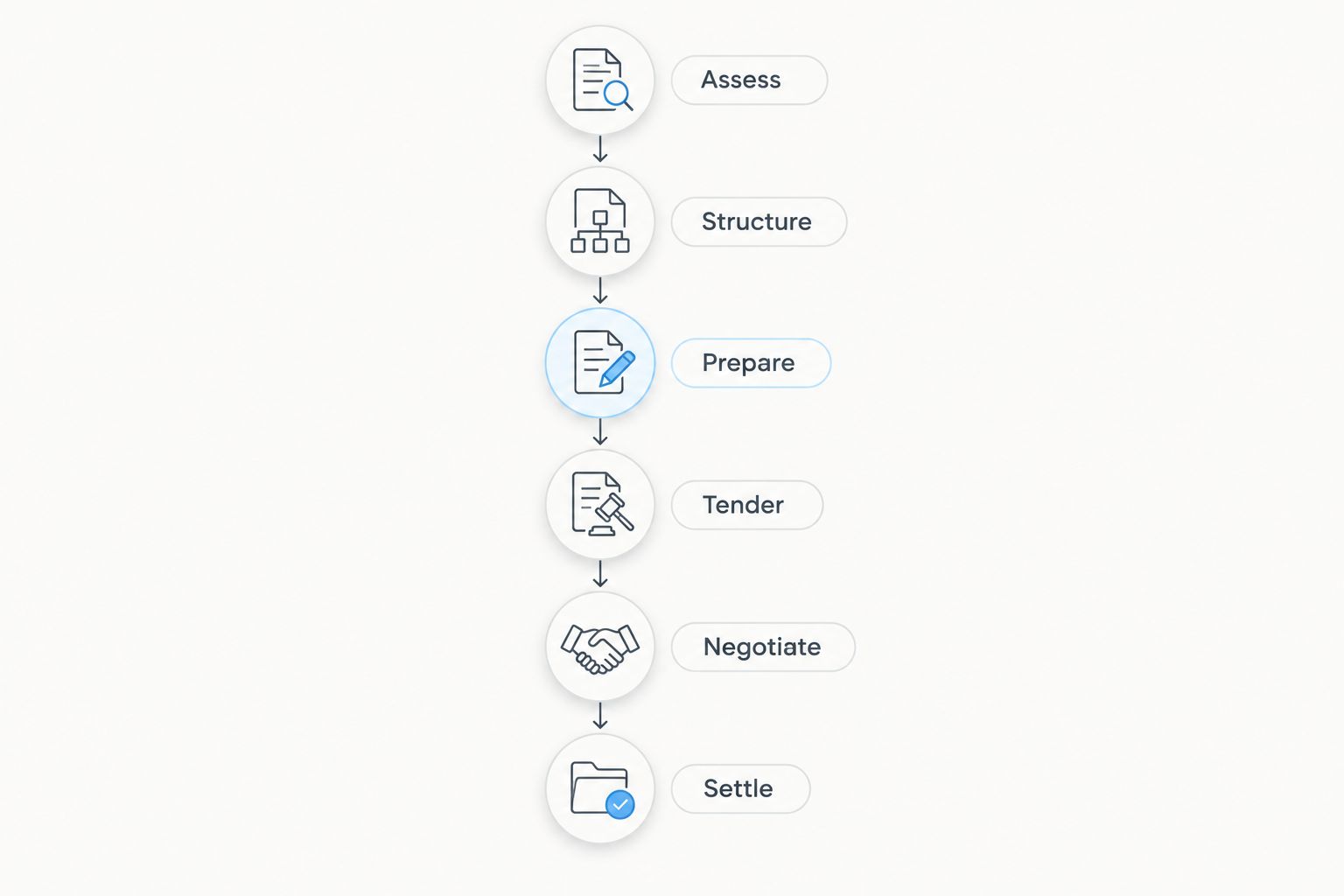
A consistent tender also exposes missing information early. If one lender accepts an earnings adjustment and another does not, record that difference instead of comparing their borrowing figures as though they measure the same thing.
What should you prepare before approaching lenders?
Start with records that explain income, commitments and ownership. The final document requirements depend on the lender and transaction.
- Financial statements and current management accounts.
- Existing loan statements and repayment schedules.
- Lease documents, rental records and relevant property expenses.
- Details of borrowing entities, ownership and guarantees.
- Evidence supporting material earnings adjustments.
- An explanation of the refinance, purchase or other business purpose.
Include equipment debt and working capital facilities even when the immediate request concerns property. For a development proposal, explain project cash flows and the proposed repayment or exit separately; do not treat projected sale proceeds as recurring rental income.
When should an established business seek a banking review?
A banking review is useful when your current facilities no longer match the business, the property or the intended repayment structure. Refinancing should test those arrangements, not simply replace one advertised rate with another.
Glenclair is best suited to established Australian business owners seeking an independent review of commercial property borrowing. Its preferred audience includes business-purpose finance above A$2 million; that focus is not a universal eligibility rule. Suitability still needs a case-by-case assessment.
Review the scope of commercial finance services against your actual need. Lender-paid brokerage and debt advisory are different engagements: debt advisory uses a retainer and success-fee structure. Establish the engagement type, remuneration and work included before proceeding.
The benefit of a broker-led review is a structured comparison of suitable lender positions. The limit is that a broker’s assessment does not replace the lender’s credit decision, valuation or final conditions.
Can rental income alone support commercial property finance?
Rental income can support commercial property finance where the lender accepts it as sufficient for the proposed obligations. The lease, property expenses, tenancy position and assessment assumptions determine whether that income supports the application.
Do not assume a signed lease settles the question. Ask what rental income has been accepted and what further repayment support is required.
Does refinancing reduce the income a lender requires?
Refinancing does not automatically reduce the income required. A new lender assesses the proposed facilities using its own policy and the borrower’s current position.
Different repayment terms or accepted income can change the assessment. Compare those changes with the obligations and conditions attached to the offer, not just the repayment headline.
FAQ
How much income do I need for commercial property finance in Australia?
There is no universal minimum income for commercial property finance in Australia. The required income depends on accepted earnings or rent, proposed repayments, existing commitments and lender policy.
Do commercial property lenders use turnover or profit?
Turnover alone does not establish repayment capacity. Lenders examine earnings and cash flow, supporting records and relevant commitments to assess whether the proposed debt is serviceable.
Can my business income support a commercial property loan?
Business income can support a commercial property loan where the lender accepts the earnings and borrowing structure. Show how the business generates cash for repayments after its other obligations.
Does more equity make up for insufficient income?
More equity does not itself demonstrate enough income to meet repayments. Security and servicing address different parts of a commercial property application.
Can I count rent paid by my own business as extra income?
Related-party rent must not be counted twice as separate repayment resources. Show the payment between entities and reconcile the underlying group cash flow.
Will every lender accept the same income adjustments?
Lenders do not necessarily accept the same income adjustments. Provide evidence for each adjustment and ask which amounts have been included in the assessment.
Does an independent broker guarantee commercial property loan approval?
An independent broker does not guarantee approval. Glenclair can assist with a commercial finance review, but the lender makes the credit decision and sets its conditions.
One last thing
Before choosing a refinance offer, ask for the accepted income figure and the assessment assumptions in writing. A larger borrowing figure is not automatically a better result if it depends on a structure or obligation you do not want.
For your 2026 review, compare the calculation behind the offer—not just the offer itself.
Related guides
- Equipment finance options for construction businesses
- Truck finance options for Australian transport fleets
- Truck finance options for owner-drivers
By the Glenclair Financial team.