
Best for equipment ownership: a chattel mortgage. For equipment finance for construction businesses in 2026, a finance lease suits use with a residual obligation, hire purchase suits ownership after contractual payments, an operating lease suits return-based arrangements, and refinancing suits a review of existing equipment debt.
- Chattel mortgages are the default equipment finance for construction businesses seeking ownership, subject to security and repayment assessment.
- Finance leases and operating leases serve different end-of-term plans; compare residual obligations and return conditions.
- Equipment refinancing changes existing debt; it does not automatically improve your overall banking position.
- Glenclair suits established Australian business owners seeking equipment finance within a wider commercial borrowing review.
The right structure depends on whether you want to own the machine, return it or refinance debt already attached to it. Glenclair’s commercial finance services cover equipment finance and refinancing through a panel of 60+ lenders; suitability is assessed case by case.
Why this matters
A construction business needs repayments that work alongside project cash flow. A machine can remain useful while the borrowing structure becomes restrictive: a large final payment, broad security or a guarantee can affect your next funding decision.
For established owners seeking business-purpose finance greater than A$2 million, equipment borrowing belongs in the wider banking review. That is a preferred enquiry profile, not a universal eligibility threshold. Smaller equipment facilities can still affect a larger commercial debt structure.
Choose the ownership and security structure before comparing repayment amounts. A lower regular repayment does not remove a residual obligation or an expensive exit condition.
What makes the best construction equipment finance?
Assess each 2026 proposal against these criteria before choosing a lender:
- Ownership: Identify who owns the equipment during the agreement and what happens at its end.
- Cash-flow fit: Compare repayment dates with the business’s forecast cash receipts, not just its annual turnover.
- Final obligations: Identify any balloon, residual, purchase condition or equipment-return requirement.
- Security scope: Check the assets, guarantees and other borrowing arrangements affected by the proposal.
- Exit flexibility: Ask how early repayment, equipment sale, replacement and contract termination work.
- Total commitment: Compare all contractual payments and obligations on the same basis, including fees and end-of-term amounts.
No structure wins every criterion. Ownership, flexibility and repayment shape involve different trade-offs.
Construction equipment finance at a glance
| Rank and option | Best for | Standout feature | Key limitation |
|---|---|---|---|
| 1. Chattel mortgage | Owning core equipment | Business ownership with lender security over the equipment | Ownership does not remove the lender’s security rights |
| 2. Finance lease | Using equipment with a planned residual obligation | Contractual use without ownership during the lease | End-of-term obligations need separate planning |
| 3. Hire purchase | Acquiring ownership after contractual payments | A defined route from hiring to ownership | Title and early-exit conditions require close review |
| 4. Operating lease | Returning equipment after an agreed use period | Use and return rather than an ownership objective | Usage, condition and termination restrictions |
| 5. Equipment refinancing | Reviewing debt on equipment already financed | Replacement of an existing borrowing arrangement | A lower repayment can conceal a longer commitment |
These are financing structures, not interchangeable lender products. The executed agreement determines your obligations; the product label alone does not.
1. Chattel mortgage: best for owning core equipment
A chattel mortgage finances equipment that your business owns, with the lender taking security over it. It is a useful starting point when you intend to keep a machine and ownership is central to the decision.
For construction businesses, assess the equipment’s expected working life against the repayment term. Do not treat the lender’s willingness to fund a machine as evidence that the machine will generate enough work.
Chattel mortgage pros:
- Ownership sits with the business rather than transferring only after the agreement ends.
- The borrowing relates to an identifiable equipment purchase.
- Repayment and balloon proposals can be compared against an ownership plan.
Chattel mortgage cons:
- The lender’s security restricts your ability to dispose of the equipment freely.
- A balloon payment leaves a final obligation that needs its own funding plan.
Best for: Established contractors purchasing equipment they intend to retain, subject to repayment capacity and acceptable security terms.
Ask whether the proposed security extends beyond the machine. Also confirm what must happen if you sell, trade or replace it before the debt is repaid.
Verdict: Buy only when ownership, repayments and any balloon fit the business’s equipment plan.
2. Finance lease: best for use with a planned residual obligation
Under a finance lease, the financier owns the equipment and your business pays to use it under the lease agreement. The lease can include a residual obligation that must be understood before signing.
A finance lease is not a shortcut to ownership. Any purchase, extension or disposal arrangements depend on the contract and the financier’s requirements.
Finance lease pros:
- The agreement separates equipment use from ownership during the lease.
- The lease schedule gives you a defined series of contractual payments.
- The residual obligation can be assessed alongside the equipment replacement plan.
Finance lease cons:
- You do not own the equipment during the lease.
- The residual obligation creates a separate decision at the end of the term.
Best for: Businesses that want a lease structure and can plan for its final obligations without assuming an automatic ownership transfer.
For a 2026 proposal, request a written explanation of every permitted end-of-term route. Ask your accountant to assess the tax and accounting treatment for your circumstances rather than relying on a general product description.
Verdict: Hold until the residual obligation and end-of-term options are documented.
3. Hire purchase: best for ownership after contractual payments
Hire purchase lets your business use equipment while making payments under an agreement that provides for ownership to transfer after specified conditions are met. Those conditions, including any final payment, belong in the comparison.
This structure suits a deliberate acquisition plan rather than a return-and-replace objective. Review the complete agreement, because the timing of title transfer matters when selling or restructuring assets.
Hire purchase pros:
- The agreement establishes a contractual route to ownership.
- Your business can use the equipment before ownership transfers.
- The payment schedule can be assessed against forecast project cash flow.
Hire purchase cons:
- Ownership remains conditional until the agreement’s requirements are satisfied.
- Early termination or disposal requires attention to the contract, not just the outstanding instalments.
Best for: Contractors who want to acquire equipment through a hire-to-own arrangement and understand the title-transfer conditions.
Compare hire purchase with a chattel mortgage using the same equipment, borrowing period and final-payment assumptions. Otherwise, differences in repayment structure can obscure the ownership comparison.
Verdict: Buy only when the ownership conditions and total commitment support the acquisition plan.
4. Operating lease: best for a defined return-based arrangement
An operating lease provides equipment use under an agreement with return conditions. It suits a business that does not make ownership the primary objective, provided the proposed use fits the contract.
Do not assume a lease includes servicing, repairs, insurance or replacement equipment. These responsibilities must be specified, along with any usage limits and equipment-condition requirements.
Operating lease pros:
- The arrangement supports a use-and-return objective.
- A defined return point can align with an equipment replacement decision.
- Responsibilities can be assessed before committing to the agreement.
Operating lease cons:
- Excess use, damage or failure to meet return conditions can create additional obligations.
- Ending the agreement early can be restrictive.
Best for: Businesses with a clear equipment-use period and operating requirements that fit the lease’s return conditions.
Avoid choosing an operating lease because it sounds simpler than ownership. Check accounting treatment with your accountant; the lease label alone does not determine how it appears in the accounts.
Verdict: Buy only when actual site use fits the permitted use and return conditions.
5. Equipment refinancing: best for reviewing existing equipment debt
Equipment refinancing replaces an existing finance arrangement with another facility, subject to lender approval and settlement requirements. It is a debt decision, not a new equipment purchase.
Start with the current payout position, remaining term and security. Then compare the replacement proposal against keeping the existing arrangement, including what happens to guarantees and other facilities.
Equipment refinancing pros:
- It creates an opportunity to reassess an existing repayment structure.
- It brings current security and guarantee requirements into the review.
- It can be considered alongside the business’s wider banking arrangements.
Equipment refinancing cons:
- Extending the repayment period can reduce regular payments while increasing the total commitment.
- Exit and establishment obligations can weaken an otherwise attractive proposal.
Best for: Established businesses reviewing equipment debt as part of a broader refinancing or banking tender.
In 2026, compare the remaining commitment under the existing contract with the full replacement commitment. Do not compare the old monthly repayment with the new monthly repayment and stop there.
Verdict: Hold until the refinance comparison includes payout, replacement terms and security changes.
How to assess equipment finance within a banking tender
Glenclair is an independent commercial finance brokerage with access to 60+ lenders. Panel access provides a basis for considering alternatives; it does not mean every lender suits every construction business or every equipment transaction.
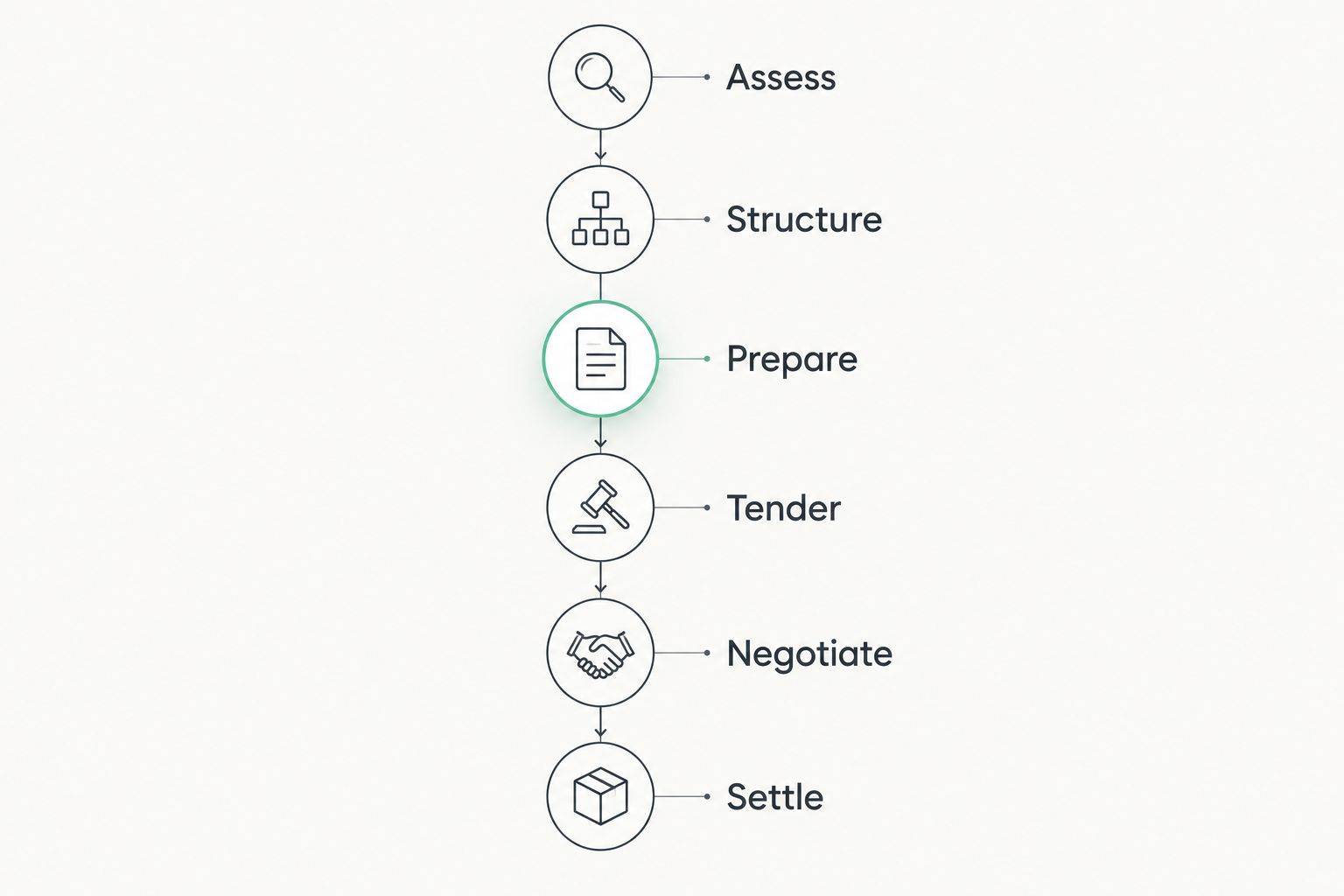
Use this process to keep a 2026 review focused on decisions rather than application volume:
- Assess: Establish the equipment purpose, existing debt, project commitments and repayment capacity.
- Structure: Decide whether ownership, leasing or refinancing fits the business objective.
- Prepare: Assemble financial information, equipment details, current contracts and payout information.
- Tender: Seek proposals against a consistent borrowing requirement and clear security brief.
- Negotiate: Compare repayments, final obligations, guarantees, covenants and exit conditions.
- Settle: Confirm documents, security releases and funding requirements before completing the transaction.
Equipment finance can sit alongside property-backed borrowing and working capital facilities. Identify shared security and consent requirements before treating the equipment transaction as separate from the rest of the banking relationship.
Lender-paid brokerage and debt advisory are different engagements. Debt advisory uses a retainer and success-fee structure; confirm which service applies and how remuneration works before proceeding.
Review your equipment borrowing
Discuss equipment finance alongside existing debt, security and wider refinancing requirements.
How these options are ranked
The ranking starts with a business seeking ownership of core construction equipment. Chattel mortgages come first for that objective; finance leases, hire purchase and operating leases serve different ownership and end-of-term preferences.
Refinancing ranks separately because it addresses existing debt. This is a structure-based comparison, not a lender-performance ranking or a claim about approval prospects.
Which equipment finance should you choose?
Start with a chattel mortgage comparison if you intend to own and retain the equipment. Compare hire purchase when the route to ownership differs, and assess leasing only after defining the residual or return obligations.
If the machine is already financed, start with the existing contract instead. For larger commercial borrowing needs, test the equipment decision against the wider banking structure before accepting a standalone proposal.
FAQ
What is the best equipment finance for construction businesses?
A chattel mortgage is the starting point for construction businesses that want to own and retain equipment. Finance leases, hire purchase, operating leases and refinancing suit different ownership, use and existing-debt objectives.
Is a chattel mortgage better than a finance lease?
A chattel mortgage fits ownership during the finance term, while a finance lease provides use of financier-owned equipment. Compare security, final obligations and tax treatment before choosing between them.
Can I refinance construction equipment that already has finance?
Refinancing existing construction equipment requires lender approval and settlement of the current arrangement. Compare the payout, replacement commitment, security and remaining equipment life before proceeding.
Does a lower repayment mean equipment finance is cheaper?
A lower repayment does not establish a lower total commitment. A longer term or larger final obligation can change the comparison, so assess the complete payment schedule and contractual obligations.
Will an equipment lease include maintenance and insurance?
Maintenance and insurance are included only if the agreement says so. Check servicing, repairs, insurance, usage limits and return conditions rather than assuming the lease covers them.
Is finance above A$2 million a universal eligibility requirement?
Finance above A$2 million is not a universal eligibility requirement. Glenclair prioritises established Australian business owners seeking larger business-purpose finance and assesses suitability case by case.
What should I prepare before reviewing construction equipment finance?
Prepare financial information, equipment details, existing finance contracts and current payout information. Include wider borrowing and security details so the equipment proposal can be assessed within the business’s banking arrangements.
One last thing
Before accepting a 2026 proposal, ask this question: What must happen if I sell this machine before the agreement ends? The answer brings payout terms, title, lender consent and security releases into one practical decision.
A repayment quote alone cannot answer it. Get the contractual answer before signing.
Related guides
By the Glenclair Financial team.