
Best overall for ownership: a chattel mortgage. Best for reviewing existing debt: refinancing. Best for temporary use: truck rental. This 2026 guide compares truck finance for owner-drivers by ownership, repayments, security and exit obligations—not advertised rates alone.
- A chattel mortgage is the default truck finance for owner-drivers to assess when ownership is the goal.
- Refinancing suits an existing truck loan review; compare total remaining costs, not just repayments.
- Finance leases, hire purchase and rental serve different ownership and operating needs.
- Glenclair suits established Australian business owners reviewing commercial borrowing, particularly requirements above A$2 million.
Why this matters
A truck earns revenue, but its finance repayments continue when the truck is off the road. Your finance structure needs to fit the work, maintenance requirements and cash your business actually retains.
For an established operator, a truck purchase also belongs in the wider banking review. Check whether existing security arrangements affect equipment borrowing, working capital or a future property purchase. Glenclair's commercial finance services cover equipment finance and refinancing through a panel of 60+ lenders; a panel is not a promise that every lender suits your application.
Glenclair is best suited to established business owners seeking truck finance within a broader commercial borrowing review. Its preferred focus is business-purpose finance above A$2 million, with suitability assessed case by case—not a universal minimum eligibility rule.
What makes the best truck finance for owner-drivers?
Judge each proposal against the same criteria before comparing repayments. For your 2026 review, use these six checks:
- Ownership: Identify who owns the truck during the agreement and what must happen for ownership to transfer.
- Cash-flow fit: Compare repayment dates with customer receipts, maintenance commitments and existing debt repayments.
- Total commitment: Include interest, fees, residual obligations, balloon payments and exit costs where applicable.
- Security: Identify the assets, guarantees and existing banking arrangements affected by the proposed facility.
- End-of-term position: Establish whether you will own, return, replace or refinance the truck.
- Evidence required: Ask what financial records, vehicle details and supporting contracts the lender needs.
A manageable monthly payment is not enough. It can conceal a large final obligation or a longer repayment period.
Truck finance options at a glance
These five options are not interchangeable. Refinancing changes an existing arrangement; the others describe ways to fund ownership or access to a truck.
| Option | Best for | Standout feature | Key limitation |
|---|---|---|---|
| Chattel mortgage | Owning a truck from purchase | Business owns the truck while the lender holds security | Secured debt remains payable through operating interruptions |
| Refinancing | Reviewing an existing truck loan | Replaces existing debt with a new facility | Switching expenses and a longer term can offset repayment reductions |
| Finance lease | Using a truck without ownership during the lease | Financier owns the vehicle during the agreement | Residual and end-of-term obligations require close review |
| Hire purchase | Taking ownership after contractual payments | Use of the truck precedes ownership transfer | Title remains with the financier until contractual conditions are met |
| Truck rental | Covering temporary operating needs | Access without buying the vehicle | Contract limits and return obligations restrict flexibility |
1. Chattel mortgage: best truck finance for direct ownership
A chattel mortgage funds a truck that your business owns from purchase, with the lender taking security over it. You repay the borrowing under the agreed schedule. A balloon payment applies only where it forms part of the contract.
This is the first structure to assess when you intend to retain the vehicle and want ownership rather than temporary access. Ownership does not remove the lender's security rights or your repayment obligations.
Chattel mortgage pros:
- Ownership begins at purchase.
- The facility directly funds an identifiable business asset.
- You can compare proposals against the same vehicle and borrowing requirement.
Chattel mortgage cons:
- Default puts the secured asset at risk.
- A balloon leaves a final amount to fund, sell against or refinance.
- Maintenance downtime does not suspend repayments unless the contract provides otherwise.
Best for: Established owner-drivers buying a truck for continuing business use.
Before signing, compare the amount financed, term, final payment, security and early repayment conditions. Ask your accountant to assess the tax treatment of the actual transaction.
Verdict: Buy with a chattel mortgage when ownership fits your plan and the full repayment obligation fits your cash flow.
2. Refinancing: best truck finance for an existing loan review
Refinancing replaces existing truck debt with a new facility. It is a transaction, not a separate ownership structure: the replacement loan still needs its own security, term and repayment arrangements.
Start with the current lender's payout figure and the remaining repayment schedule. A 2026 refinance comparison should measure the new proposal against keeping the existing facility—not against the original purchase price.
Refinancing pros:
- Creates an opportunity to reassess the remaining loan structure.
- Brings existing security and guarantees into the review.
- Allows truck debt to be considered alongside wider business borrowing.
Refinancing cons:
- Exit and establishment expenses can erode the benefit.
- Extending the term can reduce repayments while increasing total interest.
- Approval and acceptable vehicle security remain lender decisions.
Best for: Owner-drivers with an existing loan that no longer matches their operating or banking needs.
Request a written comparison of staying and switching over the same remaining period. Treat any extended-term proposal as a separate decision, with its total commitment clearly shown.
Verdict: Hold the existing facility until the refinance comparison demonstrates a benefit after switching expenses and changed obligations.
3. Finance lease: best truck finance for use without current ownership
Under a finance lease, the financier owns the truck and your business uses it under the lease agreement. The contract sets the payments and end-of-term obligations. Do not assume a finance lease includes an automatic right to return the truck without further liability.
Read the residual provisions before focusing on the regular payment. A lease does not automatically transfer maintenance, insurance or operating risk away from your business.
Finance lease pros:
- Separates use of the truck from ownership during the agreement.
- Documents the payment schedule and residual obligations.
- Provides an alternative structure to compare with an ownership loan.
Finance lease cons:
- Your business does not own the truck during the lease.
- Ending the agreement early can create substantial contractual obligations.
- End-of-term arrangements need explicit confirmation.
Best for: Operators who want to assess financed use rather than immediate ownership.
Have your accountant compare the lease with a chattel mortgage using the same vehicle and operating assumptions. An accounting preference alone does not establish commercial suitability.
Verdict: Hold until the residual, termination terms and end-of-term arrangements are clear in writing.
4. Hire purchase: best truck finance for ownership after payments
Hire purchase lets your business use the truck while the financier retains ownership until the agreement's ownership-transfer conditions are satisfied. Those conditions generally include completing the required payments.
The key distinction from a chattel mortgage is when ownership transfers. Do not choose between them on the product name; compare the actual contract, cash requirements and accountant's advice.
Hire purchase pros:
- Establishes a contractual path towards ownership.
- Allows business use before ownership transfers.
- Sets out instalments and any final payment in the agreement.
Hire purchase cons:
- Ownership remains with the financier until the required conditions are met.
- Early termination can leave a payout obligation.
- A final payment still requires a funding plan.
Best for: Owner-drivers who accept delayed ownership and have a specific reason to prefer the proposed agreement.
Confirm the ownership-transfer mechanism, early payout calculation and responsibility for insurance and maintenance. Compare those terms directly with the chattel mortgage proposal.
Verdict: Hold unless the hire purchase agreement offers a clear contractual fit for your business.
5. Truck rental: best option for temporary operating needs
Truck rental provides use of a vehicle without purchasing it. The agreement determines the rental period, permitted use, included services and return conditions.
Rental belongs in this comparison because temporary access and long-term ownership solve different problems. It is not a substitute for reviewing permanent fleet funding.
Truck rental pros:
- Avoids purchasing a truck for a temporary requirement.
- Separates vehicle access from an ownership decision.
- Lets you assess a defined operating requirement against a defined contract.
Truck rental cons:
- Rental payments do not ordinarily build ownership.
- Usage restrictions, damage provisions and return conditions need close review.
- Maintenance and replacement arrangements depend on the agreement.
Best for: Owner-drivers covering a defined interruption or temporary transport requirement.
Check permitted loads, operating areas, usage limits, insurance excesses and responsibility for downtime. Do not assume a rental provider supplies a replacement vehicle when something goes wrong.
Verdict: Buy temporary access through rental only when the contract matches the job; skip it as a default ownership strategy.
How the options rank
The ranking prioritises ownership fit, cash-flow fit, total commitment, security, end-of-term position and evidence requirements. It does not rank lenders or claim that one structure produces the lowest cost for every borrower.
Chattel mortgage leads for direct ownership. Refinancing leads for existing debt reviews. Finance lease, hire purchase and rental each occupy a different contractual use case. Choose the structure first, then compare lender proposals on consistent assumptions.
How to prepare a commercial truck finance review
For a 2026 banking review, organise the process into six stages. This sequence keeps the borrowing purpose ahead of the lender pitch.
Assess
Document the truck's role, existing debt and cash available after operating expenses. Bring current financial statements, recent management accounts and existing facility documents to the discussion. Explain any difference between reported profit and cash available for repayments.
Structure
Decide whether you need ownership, refinancing or temporary access. Consider truck borrowing alongside equipment, working capital and property commitments. Keep short-term operating needs distinct from the useful operating period of the asset being funded.
Prepare
Assemble the vehicle quotation, identifying details, proposed deposit and intended use. For a used truck, ask what valuation, age and condition evidence the lender requires. Provide customer contracts where they help explain revenue, without treating them as guaranteed future income.
Tender
Give suitable lenders a consistent funding brief. Ask each to identify the amount financed, repayment schedule, final obligation, security and conditions. Different assumptions make an apparent repayment comparison unreliable.
Negotiate
Compare more than the interest rate. Review guarantees, reporting obligations, early repayment terms and security affecting other business assets. Ask for written clarification where an offer leaves a material condition unresolved.
Settle
Check that final documents match the agreed structure before signing. Confirm insurance requirements, settlement instructions and any existing loan payout. Keep copies of the signed facility and repayment schedule with your business records.
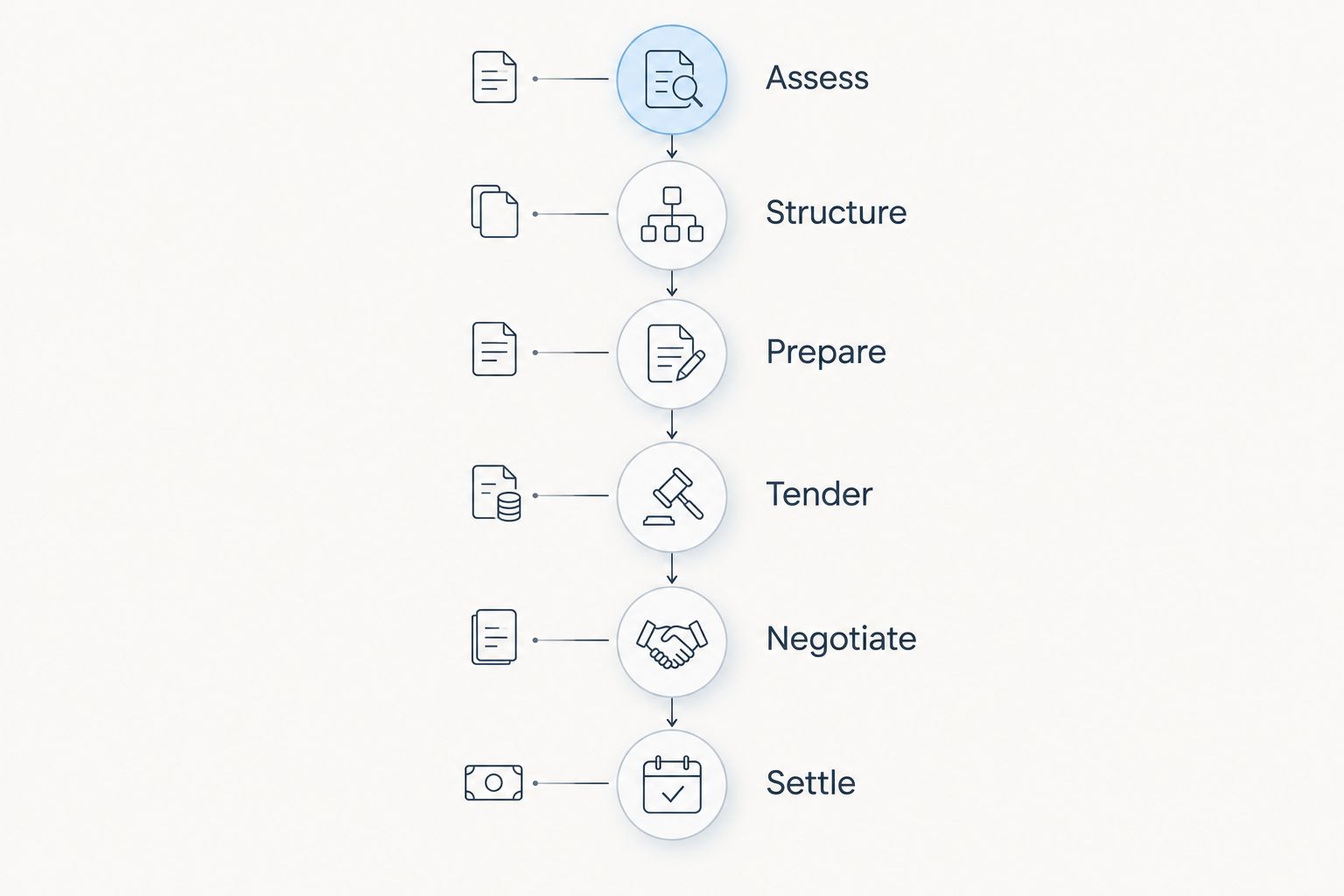
The process is a decision framework, not a promise of approval. Lender assessment, vehicle acceptability and your business's circumstances determine which proposals are available to consider.
Brokerage and debt advisory are different engagements
Glenclair distinguishes lender-paid brokerage from debt advisory services, which use a retainer and success-fee structure. Before appointing an adviser, ask which engagement applies, who pays, what work is included and how conflicts are managed.
A broad lender panel does not replace that explanation. Ask why the proposed lenders suit your truck, business records and wider banking arrangements. Request the scope and remuneration terms in writing before work begins.
Review your commercial borrowing
Discuss truck finance alongside existing equipment debt, refinancing and wider banking arrangements.
Which truck finance option should you choose?
Start with a chattel mortgage if you want to own the truck. Start with a refinance review if you already have the debt. Neither recommendation means accepting the first lender proposal.
For your 2026 decision, write down the intended holding period, affordable repayment commitment and planned source of any final payment. Then compare contracts against those requirements. Use a lease, hire purchase or rental only where its distinct ownership and exit terms fit the job.
FAQ
What's the best truck finance for owner-drivers?
A chattel mortgage is the first structure to assess when direct ownership is the goal. Refinancing suits an existing debt review, while leases and rental address different ownership and operating needs. Suitability depends on the business and contract.
Is a chattel mortgage better than a finance lease?
A chattel mortgage fits direct ownership; a finance lease provides use while the financier owns the truck. Compare total commitments, security, tax treatment and end-of-term obligations before choosing.
Can an owner-driver refinance an existing truck loan?
An owner-driver can apply to refinance an existing truck loan, subject to lender assessment. Compare the current payout, switching expenses and new repayment obligations before deciding.
Does a balloon payment make truck finance cheaper?
A balloon payment defers part of the principal rather than removing it. Compare the total repayment commitment and identify how you will fund the final amount.
Can I finance a used truck for my business?
Used-truck finance depends on the lender's assessment of the business and vehicle. Ask about age, condition, valuation and security requirements before committing to a purchase.
Does Glenclair only consider borrowing above A$2 million?
Glenclair prioritises established businesses seeking business-purpose finance above A$2 million, but assesses suitability case by case. That preferred focus is not a universal eligibility rule.
What should I ask a commercial finance broker before appointing them?
Ask who pays the broker, what work the engagement covers and why the proposed lenders suit your business. Distinguish lender-paid brokerage from debt advisory with a retainer and success-fee structure.
One last thing
Write the final payment plan before signing the first repayment instruction. If the proposal relies on selling or refinancing the truck later, treat that as an unresolved funding requirement—not as an assured outcome.
In 2026, that check matters just as much as the regular payment. It forces the decision back to the whole obligation rather than the most attractive line in the quote.
By the Glenclair Financial team. General information only; not personal financial or tax advice. Obtain advice suited to your business before entering a finance agreement.