
Best overall for fleets that want to own their trucks: a chattel mortgage. Best for changing vehicle requirements: an operating lease. Best for reviewing existing debt: fleet refinancing. This 2026 guide compares truck finance for transport fleets by ownership, repayment structure, contract restrictions and fit with your wider banking arrangements.
- Chattel mortgages suit truck finance for transport fleets that want ownership from the outset.
- Operating leases suit defined vehicle-use periods, but return conditions need close review.
- Fleet refinancing deserves consideration when existing equipment debt no longer matches cash flow or replacement plans.
- Glenclair suits established business owners reviewing commercial borrowing above A$2 million, with suitability assessed case by case.
Why this matters
A truck finance decision affects more than the repayment attached to a vehicle. Security, guarantees, residual obligations and restrictions on selling equipment can affect your next purchase, refinancing or business sale.
For an established transport business, start with the fleet and the banking relationship together. Glenclair's commercial finance brokering services cover equipment finance, business loans and refinancing through a panel of 60+ lenders. The relevant question is which structure fits your business, not which lender supplies the first quote.
Glenclair is best suited to established business owners reviewing commercial borrowing above A$2 million. That is the preferred client focus, not a universal eligibility threshold; suitability requires a case-by-case assessment.
What makes the best truck finance for transport fleets?
Use these criteria to assess truck finance proposals in 2026 before comparing individual repayments:
- Ownership: Decide whether you need to own each truck or only use it for an agreed period.
- Cash-flow fit: Match repayment obligations to operating cash flow without assuming future contracts will arrive.
- End-of-term exposure: Identify balloons, residuals, purchase conditions and vehicle-return obligations.
- Security scope: Establish which assets and guarantees support the facility and what releases require.
- Fleet flexibility: Check how replacements, disposals, additions and early exits work.
- Whole-of-business fit: Assess equipment debt alongside working capital, property facilities and existing banking terms.
A low scheduled repayment does not establish the best structure. It can coexist with a larger final obligation or restrictions that make fleet changes harder.
Truck finance options at a glance
These are financing structures, not a ranking of individual lenders. The order favours ownership and existing-debt reviews for established transport businesses; a different operating model changes the answer.
| Option | Best for | Standout feature | Key limitation |
|---|---|---|---|
| Chattel mortgage | Owning trucks from the outset | Business ownership with lender security over the financed asset | Balloon and security terms need careful assessment |
| Fleet refinancing | Reviewing existing equipment debt | Reassesses current facilities against today's requirements | Exit obligations and replacement terms can offset benefits |
| Operating lease | Using trucks for a defined period | Separates vehicle use from ownership | Return conditions and use restrictions require scrutiny |
| Finance lease | Funding use with an end-of-term plan | Lease structure with contractual residual obligations | Ownership does not transfer automatically |
| Commercial hire purchase | Acquiring ownership through a hire-purchase agreement | Ownership follows satisfaction of contractual requirements | Different ownership timing from a chattel mortgage |
1. Chattel mortgage: best for fleet ownership from the outset
A chattel mortgage lets your business own the truck while the lender takes security over it. You repay the borrowing under the agreed schedule, which can include a final balloon payment.
This is a useful starting point when trucks are long-term operating assets and ownership matters. The decision still depends on the actual contract, including security, guarantees and the treatment of an early sale.
Chattel mortgage pros:
- Your business owns the financed truck from the outset.
- You can assess the borrowing alongside the truck's intended holding period.
- Repayment proposals can be compared against a common funding brief.
Chattel mortgage cons:
- A balloon creates a future payment obligation rather than removing debt.
- Selling the truck requires dealing with the lender's security and payout requirements.
- A lender's security requirements need not stop at the vehicle itself.
Best for: Operators who want ownership and have a clear plan for repayments, replacement and any balloon.
Before choosing a chattel mortgage, compare both the scheduled repayments and the amount required at the end. Do not base the final payment plan solely on an assumed resale value.
Verdict: Buy for ownership-led funding when the repayment and security terms fit.
2. Fleet refinancing: best for reviewing existing truck debt
Fleet refinancing replaces existing borrowing with a new facility or facilities. It is a transaction rather than a separate ownership structure, but it belongs in the decision because an established fleet already carries financing commitments.
A 2026 refinancing review should start with current payout figures and facility documents. Compare the existing position with the proposed position, including the remaining debt at equivalent dates.
Fleet refinancing pros:
- Existing repayment schedules can be reviewed against current operating cash flow.
- Security arrangements can be examined as part of the proposed transaction.
- A lender comparison tests whether current facilities still meet the business brief.
Fleet refinancing cons:
- Payout obligations and transaction costs can reduce the value of a change.
- Extending repayment terms can increase total interest despite lower periodic repayments.
- Replacement finance remains subject to lender assessment and acceptable security.
Best for: Established operators whose existing truck debt needs review alongside wider banking arrangements.
Ask for a written explanation of what improves and what becomes less favourable. A reduced repayment alone does not prove refinancing is the better choice.
Verdict: Hold the current facilities until a documented comparison supports replacing them.
3. Operating lease: best for a defined vehicle-use period
An operating lease gives your business the right to use a truck under agreed terms while the lessor retains ownership. The agreement determines the permitted use, responsibilities and end-of-term process.
Start with your operating requirements rather than the lease label. Distance travelled, vehicle condition, modifications and return arrangements all deserve attention before signing.
Operating lease pros:
- Vehicle use does not require ownership by your business.
- An agreed lease period provides a defined point for reviewing vehicle requirements.
- Contractual return arrangements can suit a planned replacement approach.
Operating lease cons:
- Distance and condition provisions can create additional obligations.
- Early termination can be restrictive.
- Maintenance and service inclusions differ between agreements; do not assume they are included.
Best for: Fleets with a defined use period that can work within the agreement's operating and return conditions.
Compare the proposed return requirements with real duty cycles. A truck used intensively on demanding routes needs a contract assessed against that use, not an idealised operating profile.
Verdict: Buy for defined-period use only after checking return and exit obligations.
4. Finance lease: best for use with a clear residual plan
Under a finance lease, the lessor owns the truck and your business makes lease payments. End-of-term obligations, including any residual and available options, depend on the agreement.
A finance lease is not interchangeable with an operating lease. Read the residual provisions and establish exactly what must happen at the end; paying rentals does not automatically make your business the owner.
Finance lease pros:
- Provides truck use without ownership transferring at commencement.
- Sets out rental obligations for the agreed term.
- Makes end-of-term arrangements an explicit part of the funding decision.
Finance lease cons:
- Residual obligations require a credible funding plan.
- Ownership does not transfer automatically at the end.
- Early termination and contract changes need assessment before commitment.
Best for: Businesses that understand the lease structure and have a documented approach to its residual obligations.
Have your accountant assess the tax and accounting treatment for your circumstances. Do not choose a finance lease on a general claim that leasing is more tax-effective than borrowing.
Verdict: Hold until the residual, ownership pathway and accounting treatment are clear.
5. Commercial hire purchase: best for ownership after contract completion
Commercial hire purchase allows your business to use a truck while paying under a hire-purchase agreement. Ownership transfers when the contractual requirements for transfer have been satisfied.
The distinction from a chattel mortgage is ownership timing. That difference needs to be understood alongside payment obligations, any final amount and the conditions for completing the agreement.
Commercial hire purchase pros:
- Provides a contractual route to ownership.
- Establishes the payment obligations for acquiring the vehicle.
- Can be assessed alongside other ownership-focused structures.
Commercial hire purchase cons:
- Your business does not own the truck from the outset.
- Early settlement and disposal depend on the agreement.
- Headline repayments do not reveal every contractual obligation.
Best for: Operators seeking eventual ownership where a hire-purchase agreement fits the transaction and is offered by a suitable lender.
Compare the full ownership pathway with a chattel mortgage. Ask who owns the asset at each stage and what must happen before your business receives title.
Verdict: Buy only when the contractual ownership pathway suits your business.
How to run a banking tender for fleet finance
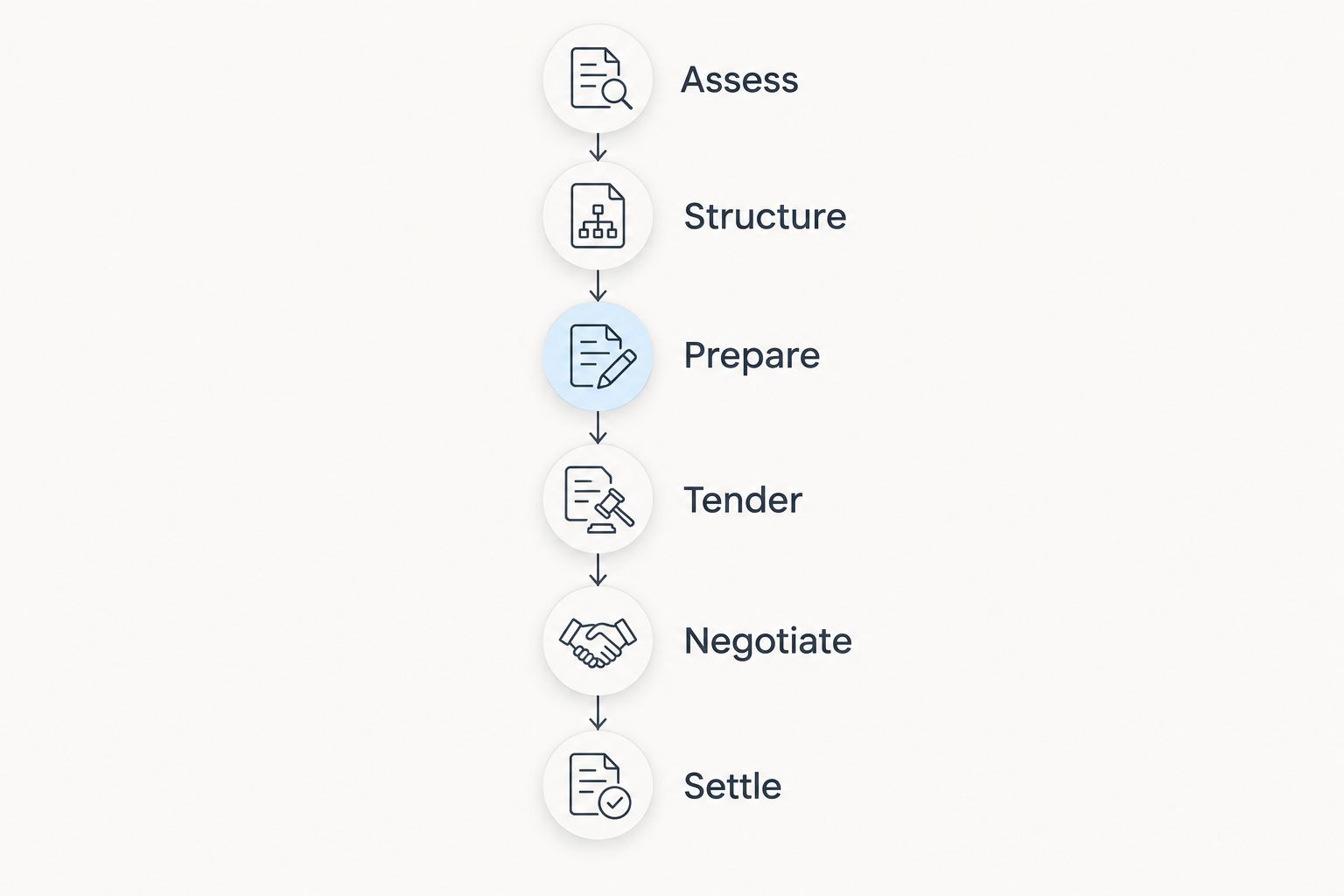
For a 2026 fleet review, use a common brief so lenders respond to the same requirements. Glenclair's process follows 6 stages: Assess, Structure, Prepare, Tender, Negotiate and Settle. Each stage should resolve a different decision rather than repeat the application.
- Assess: Review current facilities, fleet requirements, financial performance and the reason for borrowing or refinancing.
- Structure: Decide which ownership, repayment and security arrangements to seek.
- Prepare: Assemble financial information, equipment details, existing agreements and payout information.
- Tender: Present a consistent funding request to suitable lenders.
- Negotiate: Compare proposals and address repayment, security, covenant and documentation terms.
- Settle: Complete the agreed documentation and coordinate the transaction's funding and releases.
A lender panel is a source of options, not evidence that every lender suits every transaction. Request a clear explanation of the proposed lender selection and how the offers compare with your requirements.
Keep the wider borrowing position visible. A truck facility should not be assessed separately from working capital needs or security already supporting other commercial debt.
Review your fleet borrowing structure
Discuss equipment finance and refinancing alongside your existing commercial banking arrangements.
How these options are ranked
This ranking uses ownership, cash-flow fit, end-of-term exposure, security, flexibility and whole-of-business fit. It does not claim a lender comparison, approval outcome or tested savings result.
Chattel mortgages lead for ownership-focused fleets. Refinancing ranks next because existing debt deserves review before new borrowing is added. Lease and hire-purchase structures take distinct roles where their contractual features match your requirements.
Which truck finance should you choose?
Start with a chattel mortgage if ownership is essential. Start with a refinancing review if the immediate problem is existing debt. Use an operating lease comparison when vehicle use matters more than ownership and the return conditions fit your operations.
For your 2026 decision, require a written comparison of repayments, final obligations, security and exit conditions. Separate lender-paid brokerage from debt advisory: Glenclair's debt advisory services use a retainer and success-fee structure. Confirm the engagement and remuneration terms before proceeding.
FAQ
What's the best truck finance for transport fleets?
A chattel mortgage is a useful starting point for fleets that want ownership from the outset. Operating leases suit defined-period use, while refinancing addresses existing debt. The best fit depends on the actual contract and your wider borrowing position.
Is a chattel mortgage better than a truck lease?
A chattel mortgage fits ownership-led requirements; a lease fits a contractual right to use the truck. Compare security, final obligations, disposal restrictions and accounting treatment before choosing.
Should I refinance my fleet finance in 2026?
Refinance only when a documented comparison supports replacing the existing facilities. Include payout obligations, transaction costs, repayment terms, remaining debt and security requirements.
Does a lower truck repayment mean a better deal?
No. A lower repayment can reflect a longer term or a larger final obligation. Compare the full schedule and contractual terms, not just the periodic payment.
What should I prepare for a fleet finance review?
Prepare current facility documents, payout information, financial statements and details of the trucks and their intended use. The lender or broker can identify additional information required for your transaction.
Does Glenclair only assess borrowing above A$2 million?
Glenclair focuses on established Australian business owners seeking commercial finance above A$2 million. That focus is not a universal eligibility rule; suitability is assessed case by case.
Are commercial brokerage and debt advisory the same service?
No. Lender-paid brokerage and debt advisory have different remuneration arrangements. Debt advisory uses a retainer and success-fee structure; confirm which engagement applies before authorising work.
One last thing
Ask each lender to describe what happens when you sell a truck before the agreement ends. The answer exposes payout, security-release and termination requirements that a repayment comparison can miss.
Make that question part of your written brief. Fleet replacement should be planned before settlement, not discovered when the next vehicle is ready.
Related guides
By the Glenclair Financial team.